

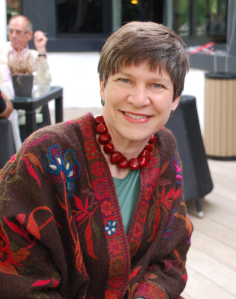
On Wednesday 28th August our friend Helen Snelson sadly passed away in York surrounded by her family and friends. It’s normal after someone has died to list their achievements and praise their impact. With Helen this would be easy. But she would have hated it. She hated being singled out. She saw herself as part of a wider team and community. As a cog in a machine that needs all its parts to function and succeed.
So, this blog won’t be a list of Helen’s achievements. Instead, it is a request. A request that we all try to be a little ‘bit more Helen’. Helen enthusiastically loved the history teaching community. She wanted us to be better so that the young people we teach get a better history education. If we all emulate her values, we can do that: we need to be a bit more Helen.
Value 1: The power of an inclusive History community.
Helen cared passionately about our history teaching community. She believed that we can all get better at teaching history and that the way to do this is by working together. Helen knew how much talent there is in the history teaching community, and she welcomed anybody who wanted to be part of it. It didn’t matter who you were, where you taught, who you knew. If you wanted to engage in the discussions, debates and make things happen, then she welcomed you with open arms. She listened to ideas, challenged ideas and encouraged people to get involved. She knew that we are stronger together and that respect and kindness for each other is the bedrock of a community.
Value 2: History should be truly representative.
The past was experienced by the full range of society. Yet when history is presented to young people or even adults it is all too often presented through a narrow lens. It is often (although thankfully these days not always) the story of white men. Helen fought to change this. She argued that history curriculums, textbooks and examinations should focus on women as much as men. That we should include previously excluded voices such as disabled people. That as a history community we have not addressed race or Black history sufficiently. None of this work is complete. In fact, it is far from it. Helen knew that and we all need to continue what she pushed.
Value 3: Multi perspectivity is fundamental to develop better citizens.
In the UK, we take it for granted that we are not only allowed but we are encouraged to teach a multi perspective version of the past. This is not the case in many countries where governments can stipulate a single narrative of the past that must be taught. Helen worked tirelessly for Euroclio, the organisation for history teachers in Europe, to help challenge this and championed a multi perspective approach. She strongly believed that multi perspectivity and critical thinking were the foundations of a strong democracy. That learning about the past in this way makes us all better citizens. We all need to continue this. Look up the work of Euroclio today. Support their causes. And in a time of increasing culture wars be prepared to stand for a truly multi perspective view of history.
Value 4: History needs to be taught to all students (to the age of 16)
History is a crucial component to any school curriculum and is vital to help our young people understand their place in the world and how our world today has been shaped. We all know this. Helen believed strongly that history should be taught to all of our students irrespective of ability. Working with history teachers in Europe, Helen would often question why history is only compulsory in our schools until the age of 14. History for all was always Helen’s mantra. We can continue her work on this front in our own classrooms and we can push the conversation about history for all until 16.
We hope that as you read this blog, you could see Helen as we knew her: kind, committed and passionate about teaching history. We will miss her wisdom, her encouragement and her amazing sense of humour and we implore you to take heed of her work and continue where she left off.
Be more Helen.
 OBHD
OBHD 