

Post by Philip Arkinstall, Secondary Partnership Lead at the University of Gloucestershire, former Curriculum Leader for History

November was always one of the most impactful times of the school year for me due to remembrance activities. Our school would have the usual assemblies, which were delivered by the history department, as well as the laying of a wreath at the local town memorial and at our own memorial to the boys who died from the school. In 2014, like other schools across the country decided to embark upon the task of raising the profile of remembrance among the school community. This involved a yearly First World War Day, where Year 9 were off timetable and involved object handling, drill, epitaph studies, medical care and firing machine guns across the field. Ultimately over the four years we wanted to do something different to our assemblies too. This blog post is about how we chose to tell the story of remembrance.
Remembrance journey
The main thrust of our remembrance assemblies was to have a different theme for each year, that built upon the previous year. We knew we wanted the symbol of the poppy to be the start and the local aspect of the boys who died in the First World War who were from the school would be another thread. By the time we got to Year 13 we wanted there to have been various different aspects of remembrance.
The idea was that the core of the assemblies would stay the same, but we could add the yearly theme into it. Thus, each year group would get a different experience, pitched to their age range and we could tie into anniversaries as they came up.
The plan looked like this:
Year 7 – Blood Swept Lands and Seas of Red.
The assembly would begin with music Goodbye, Dolly Gray (Composed in 1897 and used during the Anglo-Boer War) which played as they entered. A highly patriotic war song on loop. This gave a sense of something different to the usual assemblies. I would then ask a handful of pupils what the music made them think of. Following this we would then look at the Blood Swept Lands and Seas of Red installation at the Tower of London to link to the symbol of the poppy. The transition from the music would be followed by recruitment discussion and the First World War (FWW). I used an excellent clip from Michael Palin’s Last Days of the First World War. From here the pupils would be transported back in time to look at the origins of the FWW before looking at a slide showing acts of remembrance. I would then discuss why the poppy was the symbol, play an animation about John McCrae and finish with music by Radiohead linked to Harry Patch – pupils leave to the music and compare it to the start. A more sombre reflective piece of music.
Year 8 – The Hardenhuish Boys.
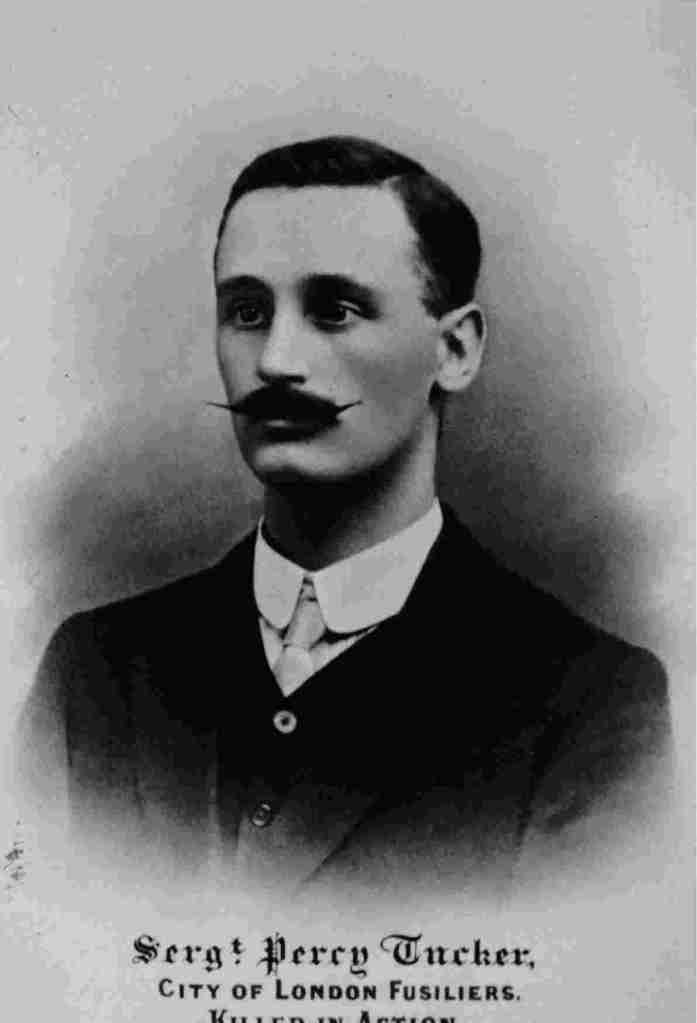
This assembly begins with music – Emeli Sande’s Read All About It whilst images of soldiers from the war are played in the background. I talk about the numbers involved in the First World War in this assembly, having recalled the importance of the date the war ended. We then discuss the memorial they walked past to get into the hall, before looking at the story of two boys from the school. I get them to look at their photos and say how like the photos at the start you have no idea who they are – why should you bother? This then links to a reading of a letter to the mother of the boys about their sacrifice and bravery. Emotionally drawing out the sense of loss and linking it to the local community. We then finish by looking at the war memorial in the town and showing them their names. Putting faces to the names – is an act of remembrance, honouring boys not much older than the pupils in the hall.

Year 9 – International War
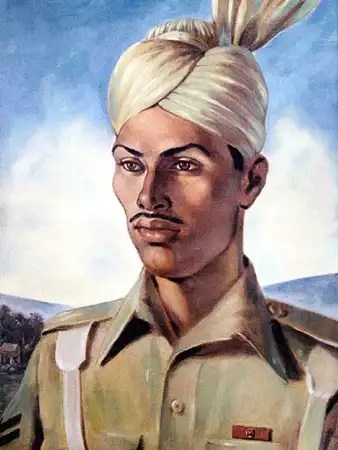
This assembly draws upon the idea of other nationalities who fought in war. The starter slide as pupils arrive is of the different crosses used by the British Legion that can be laid at war cemeteries, and I ask pupils to name the differences. They include non-denomination, Sikh, Jewish and Christian crosses. Next, I get pupils to look at a slide from the British Legion online resources which shows soldiers from different wars men and women and of different ethnicities. We then talk about the difference between the images. That being modern day conflicts and past conflicts. I then would look at the Second World War and tell the story of the VC winner Naik Fazal Din. I compare Din to Johnson Beharry, who won the VC in the Iraq war and finish this assembly by looking at ways of commemorating overseas with memorials. There is a link to the cenotaph here to show local, national and international memories, which draws upon the theme in the first assembly.
Year 10 – Conscientious objectors and shot at dawn
I start with a clip from Downton Abbey of women interrupting a recital in the village of Downton to hand out white feathers to men from the big house. I then open up the question why do this to illicit cowardice. I then talk about the concept of being a conscientious objector before revealing what happened to men on the frontline who refused orders to attack or ran away from their posts. This is then linked to the concept of being shot at dawn. I reveal the numbers killed in the different armies during the First World War, including the fact that 306 were executed from our country and the only country not to do this was Australia. This assembly finishes with the memorial at the National Memorial Arboretum and the story of Harry Farr, who was pardoned in 2006.
Year 11 – Shell shock
As the year groups are getting older the themes get starker. This assembly focuses on the impact of war and looks at the physical and psychological damage of conflict. The key video clips used here with warnings is a video image from the IMW of a shellshock victim. I then discuss the impact of warfare on the mind. The story of a soldier from a modern war is told by Roy Miller, a Second World War veteran. It highlights the link between soldier’s experiences and expressing their feelings. The video is powerful and opens up to the idea of suffering from both sides of the lines.
Year 12 – International conflict
Various flowers are shown on the board connected to remembrance – the poppy, the French blue cornflower and the Indian marigold. I ask them to identify the nation and the flower. Most can work out the first two, but the Indian flower is different. This allows me to look at global conflict over time. The focus here is on Indian forces during the Second World War. We also look at different nations who fought in both wars from Sikh and African soldiers in the trenches, to Polish, Caribbean and Indian forces in the Second World War. We end by looking at how different countries have different dates for their remembrance. For example, Russia commemorates June 22nd, which was the invasion of the Soviet Union in the Second World War and Germany is the second Sunday in November.
Year 13 – What is remembrance for?
Here I try to leave pupils with the final part of the remembrance story, which is why we remember or when is it acceptable to forget? I begin with an image of my grandfather from his time in the Korean War. I discuss what he did and some of the stories that he shares and that thankfully he survived. I recall the act of remembrance and why it was created in the first place and then we consider modern conflicts. I tie it to the idea of the war to end all wars and that clearly hasn’t been the case. The story I finish with is of the forgotten. The David Lammy clip from the House of Commons where he reveals that Black African labourers were buried in an unmarked grave next to a Commonwealth War Graves cemetery in Dar es Salaam. We talk about finding ways to commemorate these people today and that until January 2025 there was no memorial for them. The work continues.
Overview
The aim was to build up the idea of why we remember still, the importance of keeping our eyes on the modern world and trying to prevent such things from happening again. I like to bring the reality of the world situation into play in my assemblies. For remembrance I want the pupils to see that wars are not fun and that individuals were involved in these conflicts. To this extent, every assembly tells the story of ONE individual who can represent the theme from that year. I want pupils to see that there is nothing much that separates them with those people involved in 1914 or subsequent conflicts and that remembrance is international and about remembering all who fought – friend or foe. Best of luck with the planning of your assemblies this year.
Resources that you may find useful when planning your assemblies this year:
Royal British Legion Resources for Schools
My lesson sequence on Stanley Spencer and the First World War
Muslim Tommies Lesson
 OBHD
OBHD 