

This blog post was written by Jess Brown on behalf of a project between AQA and Royal Holloway, University of London. It is related to resources linked to marginalised voices that could be useful for teachers of all exam boards and key stages too.
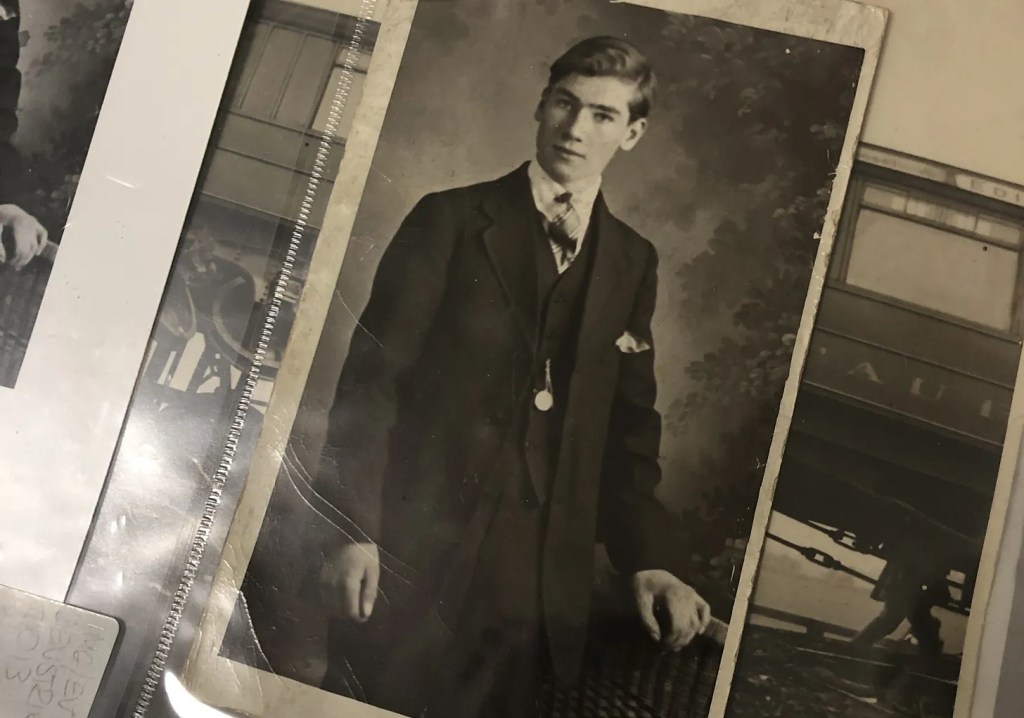
Bill Muckle, WCML
New resources for teachers of AQA’s Power and the People specification
This blog post has been written to share some exciting resources that will be available shortly in relation to teaching about marginalised voices in the history curriculum. Although most directly related to AQA’s Power and the People module, the ideas will support all history departments looking at developing a diverse curriculum using real primary sources.
The Inclusive Histories project at Royal Holloway, University of London, is developing resources to support the more inclusive teaching of AQA’s Power and the People specification. These will include short blogs for teachers to introduce stories and primary sources that help foreground traditionally marginalised voices, as well as downloadable and editable classroom-ready slides, worksheets and activities that have been co-designed with teachers.
While the project website, A People’s History, is being built and prepared for launch in spring 2026, the team is sharing examples of the stories they are working on via Substack (www.apeopleshistory.substack.com/)https://substack.com/@apeopleshistory?utm_source=global-search. These currently include:
- A blog about Olaudah Equiano and the founding moment of Thomas Hardy’s London Corresponding Society. This is a great story, introducing one of the first working class political movements; its case for the reform of parliament; its methods and what these tell us about factors such as: communication and ideas in this period; and revealing connections between radical politics and abolition.
- The story of the savvy political operator Harriet Grote and the radical political agenda at the time of the Great Reform Act. Grote helps us to see the often-hidden role of women in national politics in the nineteenth century, as well as a way to unpack the significance of the Great Reform Act through her campaign for further reform, including the secret ballot.
- The perspective of Bill Muckle, one of the Cramlington Train Wreckers during the General Strike of 1926. Images of the derailment of the Flying Scotsman are a popular way to illustrate the lengths to which some strikers were willing to go, but the story of the miners involved; their intent, motivations, imprisonment; and the campaign to secure their release are often obscured.
- The inspirational story of Mavis Best and the grassroots community campaign to ‘Scrap Sus!’ Mavis’s story provides invaluable context to both the ‘sus law’, the application of section 4 of the Vagrancy Act 1824 in 1970s and 1980s inner cities, and the Brixton Uprising in 1981. In particular, Mavis and ‘Scrap Sus’ primary sources reveal, in the words of the Black community, the inequalities of the policing and criminal justice system in the latter half of the twentieth century, and how community activism brought about political change.
Teachers can subscribe to the project’s Substack to receive new stories as newsletters, as they are being released, directly into their inbox, as well as updates about the project. The team is also offering a variety of ways for teachers to get involved as reviewers and testers of its resources, as well as paid opportunities to help co-produce and evaluate its resources.
For more information, please email: peopleshistory@rhul.ac.uk
 OBHD
OBHD 