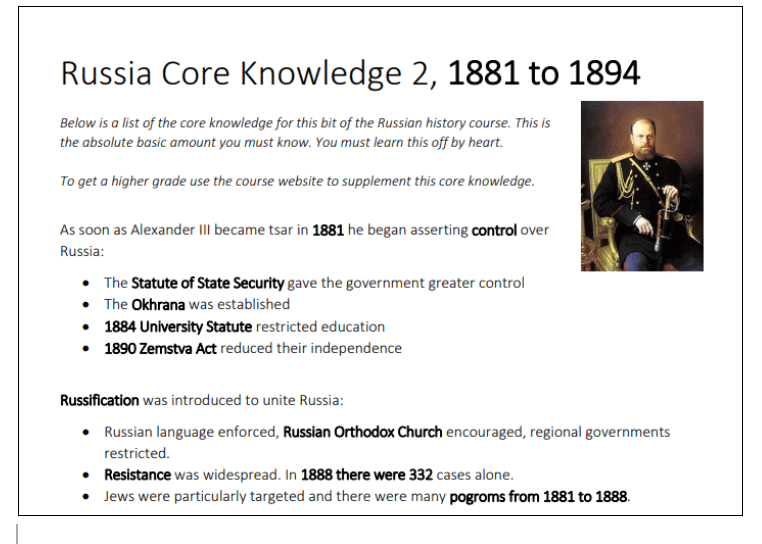
How specifying the knowledge has really helped all our learners

In this blogpost, Richard Kennett shares his department’s work to focus on core knowledge at A level. The approach could be applied at other levels. This sort of curriculum conversation leading to development is what we want to share on #OBHD. Please share your work too and meanwhile follow @histassoc and find more support via www.history.org.uk    The problem of a lack of A* grades Last … Continue reading How specifying the knowledge has really helped all our learners

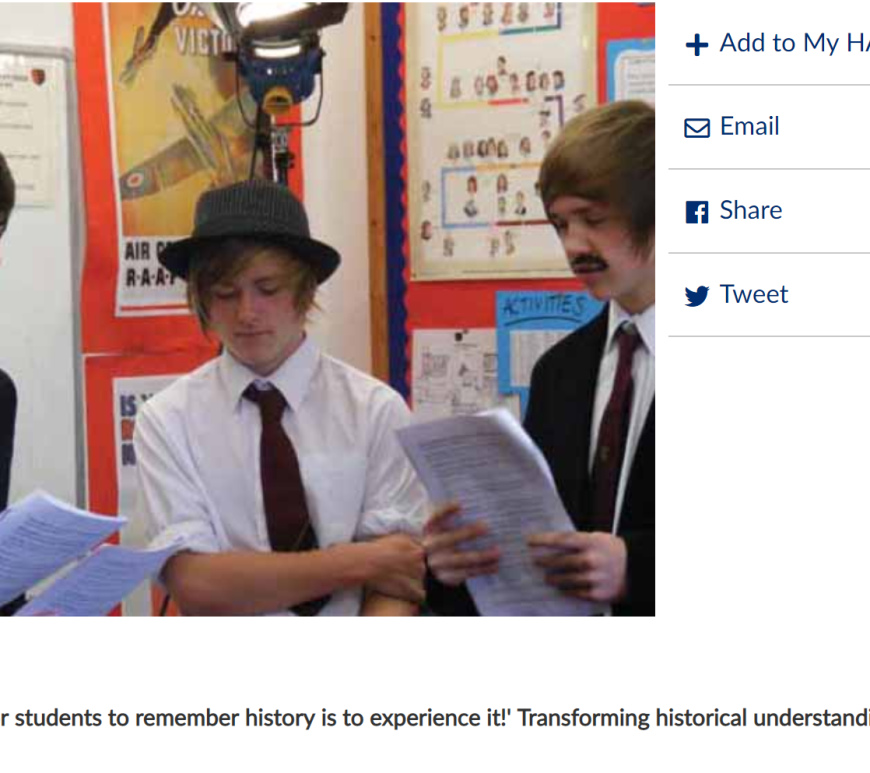
Acting out the BIG PICTURE: using geeky scripted role plays at GCSE and A Level

Jen Thornton, Head of History at Loreto Grammar School, shares her solution to teaching ‘the big picture’. She describes her approach and then shares her scripts with us so everyone can use them. Onebighistorydepartment! As an NQT back in 2006, I was blessed to work with a brilliant History department, and there is one thing I took away from that year which is still a … Continue reading Acting out the BIG PICTURE: using geeky scripted role plays at GCSE and A Level

Maps to make WW1 a truly WORLD war

In this post Jason Todd, PGCE Tutor at Oxford University and member of Secondary Committee, gives really helpful advice about how to make your teaching of World War One less limited to the Western Front, and therefore more accurate and respectful to the past, without rewriting everything you do and adding much time to the teaching of the topic… I recently had the privilege of … Continue reading Maps to make WW1 a truly WORLD war

In case you’d forgotten about thinkinghistory.co.uk …

Continuing our theme of bringing sources of good quality resoures to the OBHD community, this post features www.thinkinghistory.co.uk. It is a site where the key word is ‘respect’. Respect for people of the past acting without the benefit of hindsight and respect for voices that may not always be heard. Almost everything on it has been created and maintained by former SHP Director Ian Dawson, known … Continue reading In case you’d forgotten about thinkinghistory.co.uk …

Closing the gap for disadvantaged students – can history lead the way?

How can History departments lead the way in closing the progress gap for disadvantaged students? The progress and attainment gaps for disadvantaged students are a source of much soul searching in our profession, and almost the only sure answer we have is that there is no easy solution. However, despite the stubborn and depressing national picture, I can testify from my own experience that there … Continue reading Closing the gap for disadvantaged students – can history lead the way?

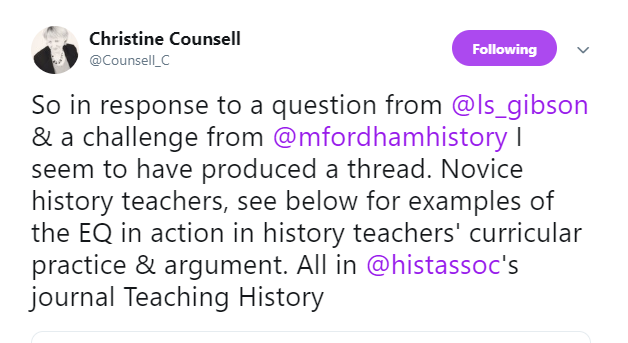
A guide to historical enquiry questions in action

A few weeks ago Christine Counsell (@Counsell-C) gave the benefit of her wisdom and her encyclopedic knowledge of Teaching History articles to all of us seeking to understand the role of the historical enquiry question in great history teaching. In case you missed it on @twitter, here it is reproduced with links to the articles…  In @histassoc TH articles, I’m not sure you want articles … Continue reading A guide to historical enquiry questions in action

Lessons learned: how are we changing our teaching in light of the first cohort of GCSE results?

In this blogpost a very experienced history teacher shares with us how her department are reshaping KS3 in the light of the first 1-9 GCSE results.  Once we had completed the mammoth two-year task of planning and teaching for the new History GCSE we awaited the results with nervous apprehension. Had we understood the spec? Had we used teaching techniques that had helped our students … Continue reading Lessons learned: how are we changing our teaching in light of the first cohort of GCSE results?

Memory palaces – the ancient idea that could be the future of history teaching?

Trying to help your students to learn all that ‘stuff’ for GCSE? Here’s a great idea from Ben Taylor (@BenTaylor_CSS) … The memory palace technique originated in Ancient Greece and has endured down the centuries. Yet recently it has been made to seem beyond ordinary folk due to its use by Sherlock in the BBC series. Nothing could be further from the truth; it is … Continue reading Memory palaces – the ancient idea that could be the future of history teaching?

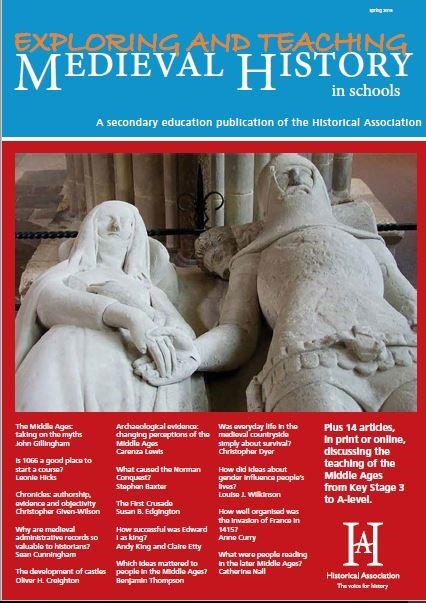
Teaching Medieval History? – websites!

There’s no substitute for reading Exploring and Teaching Medieval History – an introduction by Ian Dawson of course. However, knowing how we all need things easily to hand, Henry Walton (@HenryWalton5), Head of Humanities @manorceacademy, has extracted some of the websites and texts it mentions and added others into one handy list. He’s kindly shared it with us… Objects associated with the Conquest: http://www.google.com/culturalinstitute/beta/exhibit/iALiB6XML3gmJQ Archaeology: http://www.archaeology.co.uk/ – website with hundreds … Continue reading Teaching Medieval History? – websites!

Planning substantive concepts over time

It’s Department Improvement Planning time in many schools. At Millthorpe School the History department have chosen to focus upon mapping where students at Key Stage 3 encounter specific substantive concepts, such as monarchy, parliament and church. They are focusing their planning on what the students are thinking rather than what they are doing. They started by highlighting where each concept appears on their current Key … Continue reading Planning substantive concepts over time