Corners of foreign fields: ideas for making meaning and memory on a Battlefields Trips

Thanks to Hugh Richards, Head of History at Huntington School in York and leader of the HA’s Subject Leader Development Programme, for this blogpost. Hugh is a leading thinker about how to make history memorable and meaningful for young people, and he has a lot of experience in organising Battlefields Trips. Hopefully you will be inspired to get (back) to the Battlefields. This blog explains … Continue reading Corners of foreign fields: ideas for making meaning and memory on a Battlefields Trips

Cracking the Enigma: a new approach to teaching ALL of World War Two

Thanks to David Bailey, a history teacher at Jerudong International School, Brunei, for this blogpost. David, and his departmental colleagues, have been rethinking their approach to teaching World War Two. He hopes to start a conversation about this. Please get in touch with your ideas and think about contributing a blogpost about how you have wrestled with this issue. How do you tackle World War … Continue reading Cracking the Enigma: a new approach to teaching ALL of World War Two

What to read about reading

Thanks to Alex Fairlamb (@lamb_heart_tea) of HA Secondary Committee for putting together this reading list for anyone teaching history in schools. It will help us learn, talk and think deeply about why and how we are teacher of reading. Reading is a central part of student learning.  We are ALL teachers of literacy and therefore how we explicitly teach reading and use this to develop … Continue reading What to read about reading

Where do marks on KS3 assessments come from?

Thanks to Martyn Bajkowski, Head of History at Pleckgate School and member of Secondary Committee, for sharing work on assessment at Key Stage 3. Martyn shares how his department have read, thought and discussed their way to a manageable system that is focused on secure historical learning. Pupils find it engaging and it is providing the department with useful data to use to work on … Continue reading Where do marks on KS3 assessments come from?

Calling all history ECTs! Subject specific CPD just for you!

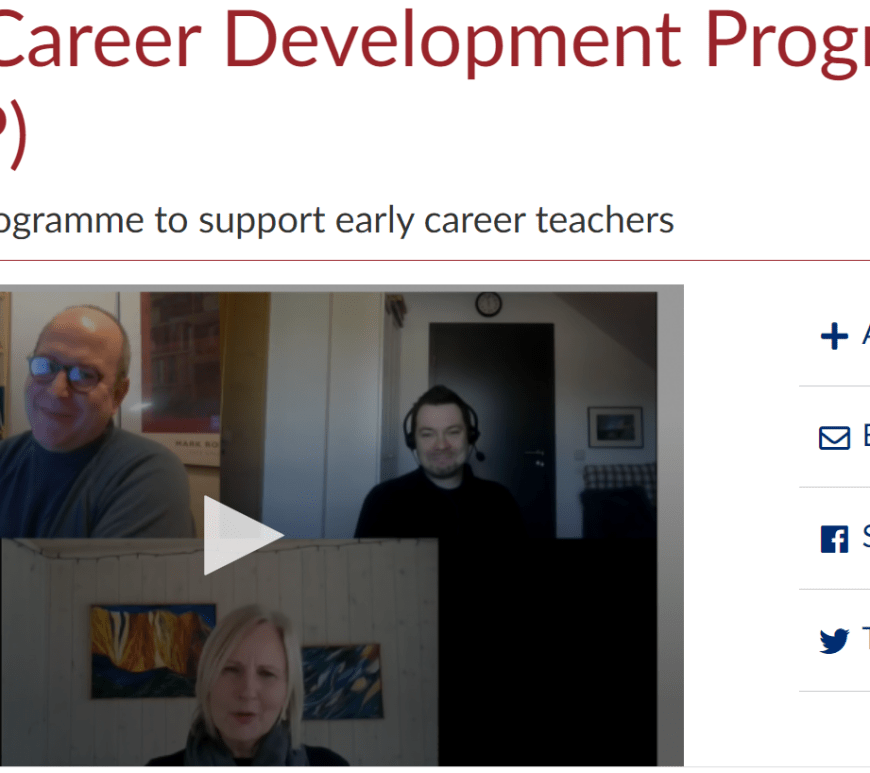
Thanks to Liz Stevenson, ECT at St Mary’s Catholic High School in Croydon, for this blogpost in which she shares how she is applying her learning from the HA’s Early Career Development Programme. What did you enjoy most about your PGCE? What do you miss from that time? Perhaps as we start our first ECT year, we focus on building our confidence in the classroom, fostering relationships … Continue reading Calling all history ECTs! Subject specific CPD just for you!

Time to bring back oracy!

Thanks to Ruth Lingard (@YorkClio), Head of History at Millthorpe School in York for this blogpost. Ruth is laying down a challenge to us all to refocus on oracy. Our primary colleagues do this in history. Our colleagues in independent schools do this in history. How might we be short-changing our students if oracy is not at the heart of all historical learning in schools? … Continue reading Time to bring back oracy!

Planning help from back issues of Teaching History

Thanks to Anne Hooper, member of HA Secondary Committee, for modelling how her department has trawled the back issues of Teaching History for curriculum planning support. The ‘vague recollection’ she talks abouts is not there in the minds of new members, but there are always people to ask. For example, a call out on Twitter for ‘anyone know a TH article that can help with…’ … Continue reading Planning help from back issues of Teaching History

Smartphones and Mirrors: using presentisms constructively in the classroom.

Here, Jessie Phillips, History Teacher at Sawston Village College, takes her thinking about presentism in the history classroom further. She points out that this tendency to interpret the past through present values and concepts is used by historians as a conceptual scaffold. She challenges us to think about how presentism can help pupils make their own meanings out of history. She builds on David Armitage’s … Continue reading Smartphones and Mirrors: using presentisms constructively in the classroom.

In at the deep end? Swimming lessons for newly-appointed Subject Leaders

In this blog, Catherine Priggs and Hugh Richards offer some ideas for newly-appointed Subject Leaders of History, organised month by month for the first year. Inevitably this isn’t an exhaustive list, and whilst context will determine the timing of some of the points mentioned below, the aim of this blog is to help newly-appointed Subject Leaders to reflect on key moments. Cat and Hugh are … Continue reading In at the deep end? Swimming lessons for newly-appointed Subject Leaders

The case for displays in the history classroom

Thanks to Secondary Committee member Gemma Hargraves (@History_Girls) for this latest post, inspiring us to make meaningful and appropriate use of classroom wall displays. You can find some resources that may be useful in the ‘display materials’ category of this blog. Open Days are approaching and many schools expect classroom walls to be adorned with displays to enhance learning, or at least to give a … Continue reading The case for displays in the history classroom