Gained time = curriculum time

Thanks to Catherine Priggs, member of HA Secondary Committee, and Geraint Brown, HA Fellow, for this blogpost on how to use time gained in the best possible way for your history curriculum. They provide practical help to guide you in a curriculum review process. Pupils on study leave? Exam season coming to an end? More non-contact time? Now is the perfect time to relax… and … Continue reading Gained time = curriculum time

The power and potential of Pratchett (for your History curriculum)

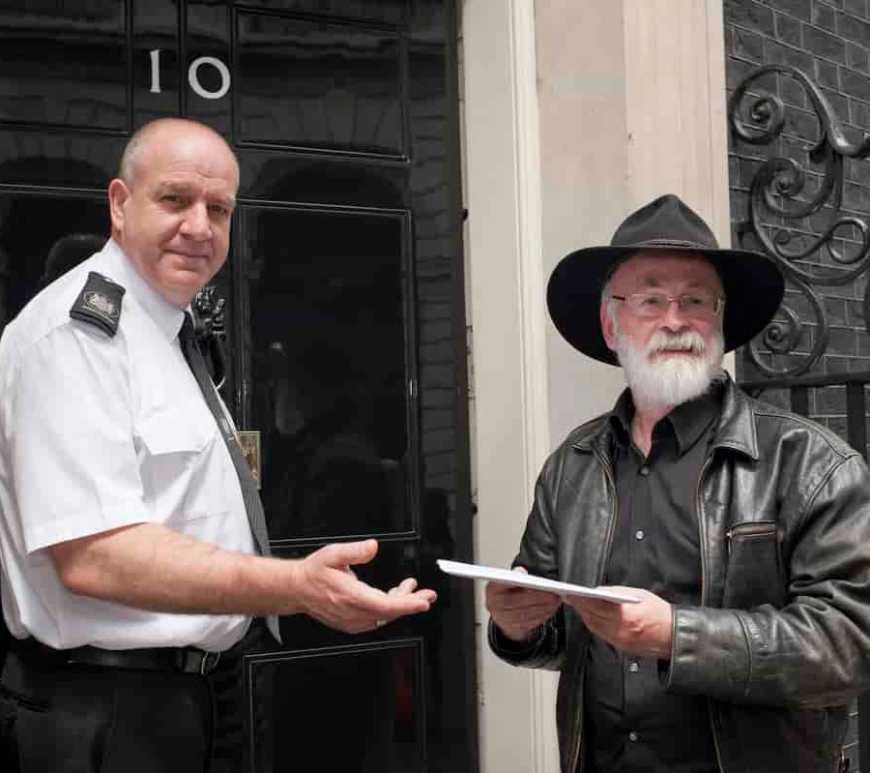
Thanks to Gemma Hargraves, deputy head of the Crypt School, Gloucester, and member of Secondary Committee for this blogpost focused on building students’ sense of period and place to help them imagine a past world with joy. With the increasing prominence of stories in history education, I wanted to make the case for the inclusion of one of Terry Pratchett’s stories in a KS3 curriculum. … Continue reading The power and potential of Pratchett (for your History curriculum)

Active history to make history memorable and accessible

This blogpost accompanies the launch of a new webpage on the HA website. The ‘knowledge turn’ of recent years has been very welcome in many ways. There is inspiring work and success in evidence across the country in relation to developing coherent curricula. There are wonderful examples of historical enquiry and the use of historical narratives weaving disciplinary and substantive knowledge effectively. And yet, there … Continue reading Active history to make history memorable and accessible

Curricular implementation at Key Stage 4: Anatomy of a GCSE History Unit.

Thanks to Hugh Richards, Head of History at Huntington School and course leader of the HA’s Subject Leader Development Programme, for this blogpost. In it Hugh walks us through the process of planning a GCSE History Unit. From that he draws out GCSE planning principles. This blogpost is useful for anyone also planning GCSE units and to discuss in departmental CPD. I have recently planned … Continue reading Curricular implementation at Key Stage 4: Anatomy of a GCSE History Unit.

Developing substantive thinking: a project to create connections through a KS3 curriculum

Thank you to Sarah Jackson, Head of History at Sawston Village College in Cambridgeshire, for this blogpost sharing some more of the work of the department… As a department we have often talked about the huge impact that cultural literacy has on the achievement of our pupils. Students who don’t have ‘pictures of the past’ find it hard to understand new content as it doesn’t … Continue reading Developing substantive thinking: a project to create connections through a KS3 curriculum

Supporting the development of students’ schema: a wish list for students arriving for their first year of A Levels

Thanks to Heather Sherman of York College for this blogpost. Heather teaches in an FE College and every year she meets new students from many schools as they embark on their two years of A Level study. Heather writes supportively as to how teachers of students at Key Stage 4 can help with the transition to Key Stage 5. Despite the pressures of the exam … Continue reading Supporting the development of students’ schema: a wish list for students arriving for their first year of A Levels

Making sense of the past: history curriculum and the education inspection framework

Thanks to Heather Fearn, Inspector Curriculum and Professional Development Lead, Ofsted for this blogpost… What images come into your head when I say the word ‘Egyptians’? Probably multiple thoughts and ideas of pyramids, pharaohs and hieroglyphics. Or perhaps the word triggers more modern connotations? When I spoke at the Historical Association Annual Conference recently, as you might expect, I felt very assured of the audience’s … Continue reading Making sense of the past: history curriculum and the education inspection framework

Building schema: Maps and Mnemonics

Practical advice from a colleague wrestling with how to ensure students learn and retain sense of place… I’ve been working hard with my Year 11s to make their knowledge secure. This is so that they can feel confident forming their arguments, both in discussion in class and ultimately for their written answers in the exam. The new Making of America unit on the OCR SHP … Continue reading Building schema: Maps and Mnemonics