

This article was written by Dr Dani Hilliard, member of the Dore Archive Research Team and founder of Argue to Think, a company designed to aid the development of academic writing and business planning.
For History Teachers everywhere introducing the
Dore Archive Research Team (DART)
Contact us through our blog found at https://dorewasinderbyshire.blogspot.com
Who are we?
The Dore Archive Research Team (DART) is a small but dedicated group of volunteers whose purpose within the village community is multifaceted. One of the group’s roles is to archive and collate material generated through the many publications of village activities through the past, including photographs, newspaper and journal articles. Another is to answer queries about family and local history to those who are interested, e.g. newcomers to the area, and yet another role is to create exhibitions that highlight key events in the village past. Local families often leave family histories and wills to the village to archive for future interest, and these are collated and added to the archives and heritage collection.
Why is this of interest to History Teachers?
Dore is a village that has a history of over 1000 years. It is named in the Anglo-Saxon Chronicles as the place where King Ecgbert of Mercia and King Eanred of Northumbria met in 829. The River Sheaf which runs through Dore was the boundary between the Danelaw and Anglo-Saxon territory and, consequently, was of strategic importance. It was part of the ‘buffer zone’ that existed under the influence of York. The Domesday Book states that the land was held for William by Roger de Bully although it had once been held by Leofwin and Edwin.
Dore during Mediaeval times was mostly a gathering of small farms owing some of its prosperity to the Premonstratensian monks who founded Beauchief Abbey, which is situated close by, in 1183. The river Sheaf throughout Mediaeval times was a wonderful source for a variety of agricultural uses – e.g. fulling as well as other mills run by the monks. The Reformation impacted significantly on the area, although the Abbey, much reduced, is still in use.
The Sheaf is one of five rivers that flow into Sheffield. Dore is now situated on the outskirts of Sheffield very close to the Peak District. The Industrial Revolution left its mark on the village: census material shows the range of jobs: filemakers, sawsmiths, railwaymen, miners and lamplighters to name just a few of the occupations of the village men and women who also maintained the farms that are still extant today. Sites for new buildings in the village must be very carefully surveyed – old maps highlight the extent of mining and other industrial practices that impacted significantly on the topography of the village. Water courses – the very streams that fed the industrial revolution – cannot be ignored either.
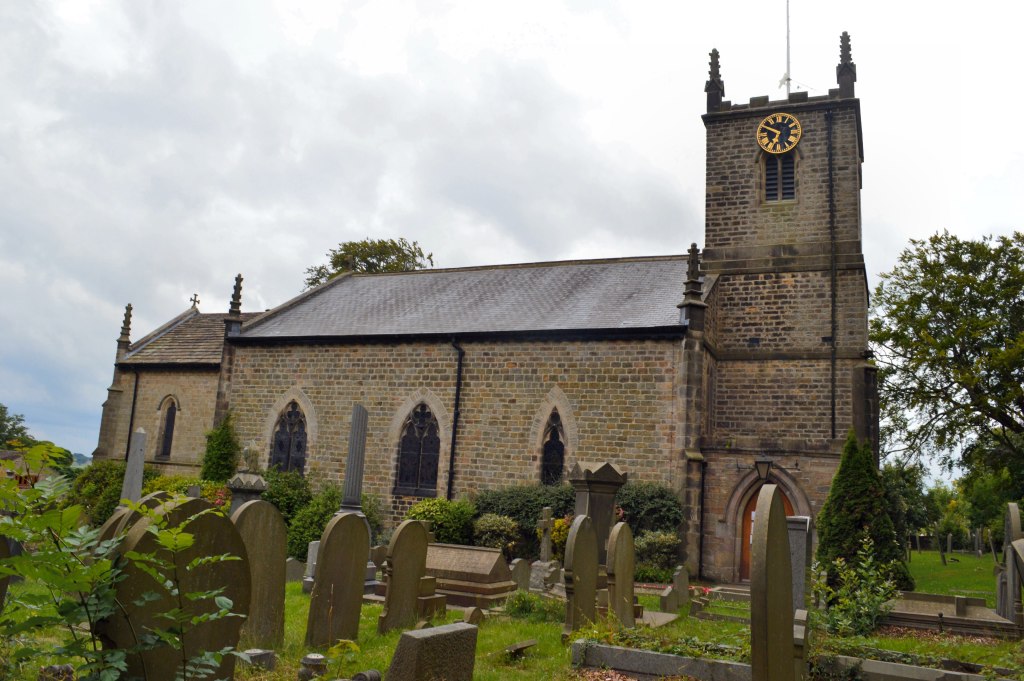
The village church – Christ Church, Dore – was consecrated in 1829. The construction was built as a ‘chapel of ease’ within the parish of Dronfield. The parish church, St John the Baptist, Dronfield, owes its inception to the monks of Beauchief Abbey. The graveyard in Dore is a rich source of history. There are brothers who are commemorated in the graveyard who were involved in the Crimea and then one in the Indian Mutiny. There are other soldiers, sailors, wrens and airmen from every aspect of village life that fought and died in WW1 and WW2.
The graves also include a mass grave that holds smallpox victims who were involved in the construction of Totley Tunnel and tragically an infant as well.
What are our current projects?
Christ Church, Dore, has recently been refurbished but the funding did not extend to the graveyard so to maintain and keep the graveyard safe and cared for the Church is running an Adopt a Grave scheme. DART researches the life of the person in the grave so that the adopter has a better understanding of who they are looking after. DART is also creating graveyard trails so that village people and visitors become more aware of the history of the village. There was a Military Trail last year which commemorated some of the people who were involved in military conflict including WW1 and WW2, and at the moment 2 more graveyard trails are planned – one that looks at some of the occupations that the people in the village had during industrialisation, and the other will focus on what the women in the village did. The literature created for the trails is limited to fit into the handouts but a more comprehensive depiction of the people who lived in Dore in the past, whatever they did, will be found in the blog.
2029 will also be a very significant date in the village because it will be 1200 years since Ecgbert and Eanred met in Dore over the Limb Brook.
It is also the bicentennial anniversary of the consecration of Christ Church, Dore.
There will be commemorations, celebrations and a lot of History discussed.
How we can help you…
DART is a group with considerable research experience and extensive local knowledge. Dore is a village that is steeped in History but is still a vibrant and lively place to be. There are rich layers of History in this place – and so many people – the not so rich and famous as well as the entrepreneurs and powerful industrialists have left their mark.
Make your history class come alive with authentic research from Dore’s Archive and Heritage Collection.
Consider the following – just as examples.
Key Stage 3.
1066 – 1509 Norman Conquest – Magna Carta and Mediaeval Society
Norman Conquest: –
- The Ferrers family came to England with the Conqueror, and the family had extensive lands in Derbyshire and Staffordshire. Dore was part of the lands although the Domesday Book mentions Robert de Bully holding Dore.
Magna Carta: –
- Dore is very close to the Peak District where the Romans mined for lead. Castleton, where the evidence of Roman lead mining still exists, is just a few short miles from Dore. It is the only site for the mining of Blue John – valuable since before the Romans.
- Castleton is also the home of Peveril Castle which was held for King John by William de Ferrers during the First Baron’s War of 1215 until 1217. Ranulf de Blondeville III Earl of Chester, another powerful baron holding land in the area, did not support the king.
1509 – 1745 The Reformation (Henry VIII). Elizabethan era and the English Civil War
Henry VIII: –
- The monks in Beauchief Abbey were deeply involved in the Pilgrimage of Grace and the abbey, as a consequence, was one of the first to be dissolved during the Dissolution of the Monasteries
Elizabethan era: –
- Mary, Queen of Scots, was imprisoned in Sheffield Castle and Sheffield Manor Lodge, under the care of George Talbot and Bess of Hardwick – the Earl and Countess of Shrewsbury. Dore was part of the area managed by the Earls of Shrewsbury and the area was a hot bed of Catholic plots trying to release Mary.
1745 – 1901 The Industrial Revolution, the British Empire and social changes
- Dore would have lain on an essential part of the ancient drove byways where shepherds drove their sheep to markets and throughout Mediaeval times Dore, and its surroundings, was deeply rural.
- However, as early as 1697 Abbeydale Works, just a 10-minute walk from Dore, was the largest water-powered industrial site on the River Sheaf.
- We have extensive records of Victorian village life that highlight the transition from rural occupations to industrial. Census material shows how farmers became metal workers involved in the making of steel and different steel tools.
- Many Dore villagers worked in the Abbeydale Works which is now a museum called the Abbeydale Industrial Hamlet.
GCSE
British Depth Studies
Anglo-Saxon and Norman England (c1060-88)
- An examination of the buffer zone between Mercia and Northumbria, of which Dore is pivotal, and a study of Leofwin and Edwin will give students an idea about Anglo-Saxon England before the Norman Conquest.
- An investigation into the gathering of evidence for The Domesday Book will also reveal how land holding had changed since the Conquest – and how William de Bully was able to hold the land for William.
Henry VIII and his ministers (1509 -40)
- Any examination of the impact of the Reformation would be incomplete without understanding the significance of the Pilgrimage of Grace and the role of individual religious houses and monks. The Premonstratensians of Beauchief Abbey are an excellent example.
Early Elizabethan England 1558-88
- Catholic plots and Mary, Queen of Scots are persistent thorns in the side of Elizabeth.
Thematic Studies
Medicine through time
Researching the lives of the people in the graves yields fascinating history – they tell us about: –
- The brothers, who were involved in the Crimean War (1853-1856), died at home of TB but years apart: whilst the older brother’s wife died in Neemuch, Madhya Pradesh, India, in 1859, during the Indian Mutiny: she died from an illness.
- Another village soldier who died at Sebastopol, before Florence Nightingale arrived, died of diarrhoea whereas others died of dysentery.
- The smallpox graves of the railwaymen who worked on the railways and the construction of the Totley Tunnel, include the grave of a young child showing how families suffered too.
Warfare and British Society c 1250 – present
The village is over 1000 years old – here are just a couple of examples that demonstrate that extensive and deep History.
British Society: –
- We have extensive records of the people who existed during The Industrial Revolution in intricate detail from miners, railwaymen and metal workers to pub owners, postal workers and school masters.
Warfare: –
- In the graveyard there are soldiers who became airmen during WW1, who were also part of the Sheffield Pals. One gravestone commemorates a pilot who saved the lives of his crew while sacrificing his own.
A Level
Here are a few topic areas that we can contribute to: –
The Heptarchy
Norman Conquest
Tudor Rebellions
The Role of the Church and the Reformation
Political, Social Economic History from 1800 to present day.
Here are a few examples of how we can help with this particular topic area…
- The transition from rural to industrialisation
- The political impact of industrialisation – e.g. the Sheffield Outrages
- Education – The Village School – we have extensive records.
- The role of women in society.
- The growth and impact of Methodism
We also have several very useful resources generated from previous research conducted in the village
Do please check out our blog dorewasinderbyshire.blogspot.com and leave a message on the contact form.
We look forward to hearing from you.

